
U.S. President Donald Trump arrives for a state banquet hosted by Chinese President Xi Jinping at the Great Hall of the People on May 14, 2026 in Beijing, China.
Alex Wong | Getty Images
Highlights
- China and the U.S. expand agricultural trade with preliminary agreements to lower tariffs.
- Significant reduction in trade halted by previous tariff barriers, with projections for a 10% cut on soybean tariffs.
- The U.S. expects substantial purchasing commitments from China in the coming years.
Introduction to a New Trade Era
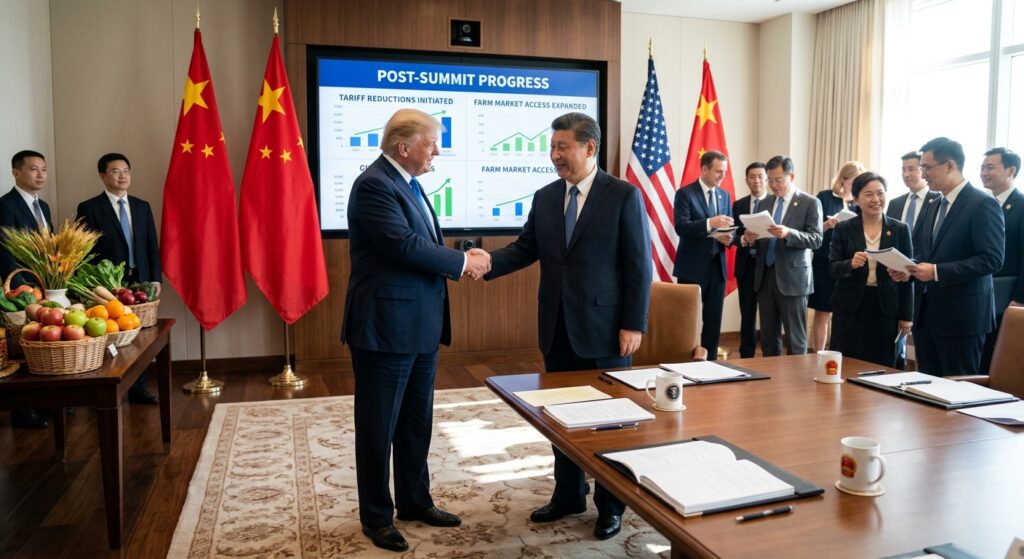
The recent summit in Beijing between U.S. President Donald Trump and Chinese President Xi Jinping has set the stage for a noticeable shift in agricultural trade relations between the two economic giants. The discussions, concluded on May 16, resulted in a series of preliminary agreements aimed at reducing tariffs and addressing non-tariff barriers, which have long impeded agricultural imports. This new diplomatic effort signifies an important step towards normalizing trade relations and promoting a more cooperative economic environment.
The significance of these agreements cannot be underestimated, as they come at a time when agricultural trade between the U.S. and China has faced immense strain. U.S. agricultural exports to China decreased dramatically in recent years, dropping 65.7% to $8.4 billion in 2025, primarily due to retaliatory tariffs. With these preliminary steps towards re-establishing a healthy trading relationship, both nations are seeking to re-open channels that could lead to mutual economic benefits.
Diving Into the Details of Agreements
The core of the latest negotiations has focused on expanding agricultural trade through reciprocal tariff reductions across a variety of goods. The specifics were not thoroughly detailed, but market experts are anticipating a significant 10% reduction in tariffs on soybean imports, which, if enacted, could reignite purchases from private Chinese buyers that were curtailed in previous market cycles. In the past, U.S. farmers had been heavily reliant on government-mediated purchases from state crop traders, which led to limited participation in agricultural trade dynamics.
Additionally, the U.S. Trade Representative has expressed optimism about expectations for China to significantly ramp up its agricultural imports, projecting purchases worth “double-digit billions” over the next three years. This level of commitment hints at a coordinated effort to address longstanding barriers, such as hurdles faced by U.S. beef and poultry exports, which have struggled to secure market access amidst regulatory skirmishes.
Implications and Future Directions
The implications of these preliminary agreements extend beyond mere tariff reductions. They represent a policy shift that could pave the way for increased bilateral trade, fostering greater economic interdependence between the U.S. and China. By addressing not just tariffs but also non-tariff barriers, both sides are acknowledging the complexity of international trade and the need for comprehensive solutions to outstanding regulatory issues. China’s recent move to extend registrations for U.S. beef plants is a clear indication of the potential for renewed market access.
As these agreements progress towards finalization, the agricultural sector stands poised for a revival, which could benefit both large-scale farmers and smaller enterprises in the U.S. and China. However, mutual trust and consistent policy implementation will be essential to sustain a positive trajectory. The trade landscape remains vulnerable, and expecting conflicts or shifts in political dynamics are part of the reality ahead.
In conclusion, the recent agreements between the U.S. and China symbolize a potential turning point in agricultural trade, with opportunities for growth and cooperation on the horizon. As both nations work through the complexities of these negotiations, key questions linger: Will the agreements translate into real economic changes for farmers? How will the international community respond to this shifting trade landscape? And what challenges lie ahead in maintaining this fragile but promising relationship?
Editorial content by Jordan Fields